
At work, favors are tricky because friendship, hierarchy, deadlines, performance, and office politics all sit at the same conference table. A small favor can be generous teamwork. A repeating favor can become invisible labor with a calendar invite.
The best office favor culture is clear: people ask specifically, give realistic deadlines, respect capacity, credit the help, and do not turn the helpful person into the permanent rescue department.
The FavorDaily office rule
If the favor affects workload, deadlines, responsibility, credit, or risk, treat it like work — not like a casual snack request.
Six healthy workplace favor rules
These rules keep favors useful instead of weird.
Define the task
“Review slide 4” is clear. “Can you look at this?” may be a trapdoor.
Name the deadline
Work favors need timing. “Whenever” often means “secretly urgent.”
Respect workload
Before asking, remember the other person already has a job. It may even be their job.
Give credit
If someone saves the deck, fixes the spreadsheet, or writes the note, do not vanish with the glory.
Avoid repeat freeloading
One favor is teamwork. Every Friday at 4:45 is a system failure with shoes.
Escalate real work
If the “favor” changes scope, timeline, or ownership, bring it into the open.
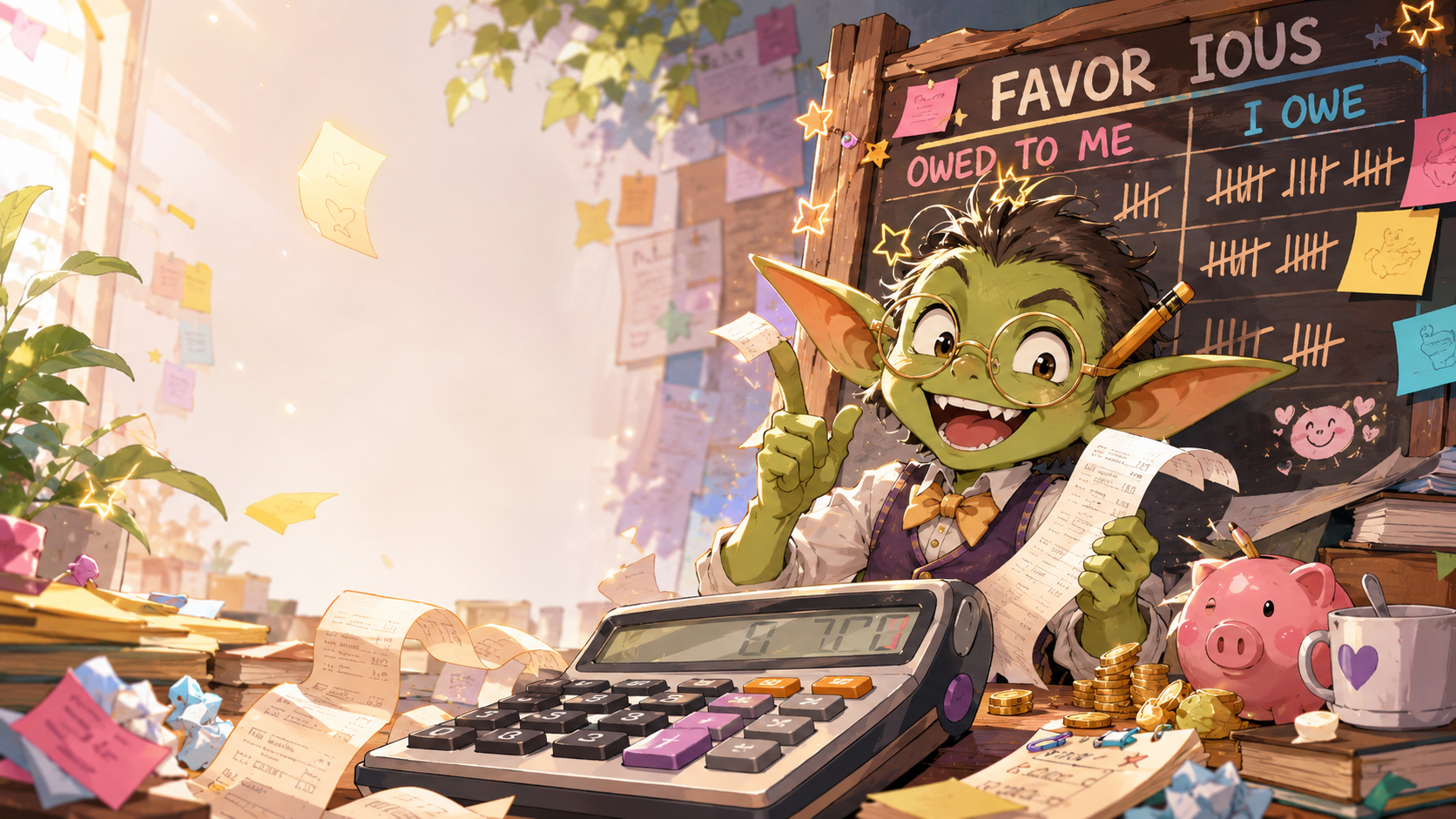
The office ledger gets weird fast.
When favors affect deadlines, credit, risk, or ownership, the request needs clarity before resentment starts keeping score.
Useful workplace scripts
Clear language prevents the office favor goblin from hiding inside a vague Slack message.
Asking for a quick review
“Could you review slide 4 for accuracy by 2 PM? No need to check the whole deck.”
Setting a limit
“I can give this 20 minutes today, but I can’t own the full rewrite.”
Declining politely
“I’m at capacity today, so I can’t help with that without missing my own deadline.”
Redirecting recurring work
“This is coming up often. We should decide who officially owns it going forward.”
Workplace favor or work assignment?
Some office favors are harmless. Others should be assigned, scheduled, tracked, credited, or managed.
| Request | Probably a Favor | Probably Work |
|---|---|---|
| “Can you sanity-check this sentence?” | One quick look, low risk. | If it becomes editing the whole proposal. |
| “Can you cover my meeting?” | One-time, clear context, easy handoff. | If it involves decisions, ownership, or regular coverage. |
| “Can you fix this spreadsheet?” | Small formula issue, quick assist. | If the file is business-critical or repeatedly broken. |
| “Can you help with the presentation?” | One slide, clear section. | If “help” means write, design, present, and absorb blame. |
When the favor comes from your boss
A favor from a manager can feel less optional. That does not mean you should snap back with “ask the goblin.” It means you should clarify priority, timing, and impact.
- “I can do that. Which current task should I pause?”
- “Is this more urgent than the report due today?”
- “I can help with the first draft, but I’ll need someone else to finalize it.”
- “I want to make sure I understand: is this a one-time favor or part of my role now?”
When you are the helpful person
Being helpful is good. Becoming the unofficial overflow department is not. If people keep coming to you because you always rescue them, your kindness needs a door, a lock, and possibly a tiny office dragon.
Helpful boundary
“I can show you how to do it once, but I can’t keep doing it for you every week.”
Credit boundary
“Happy to help, but please note that I contributed the analysis section.”