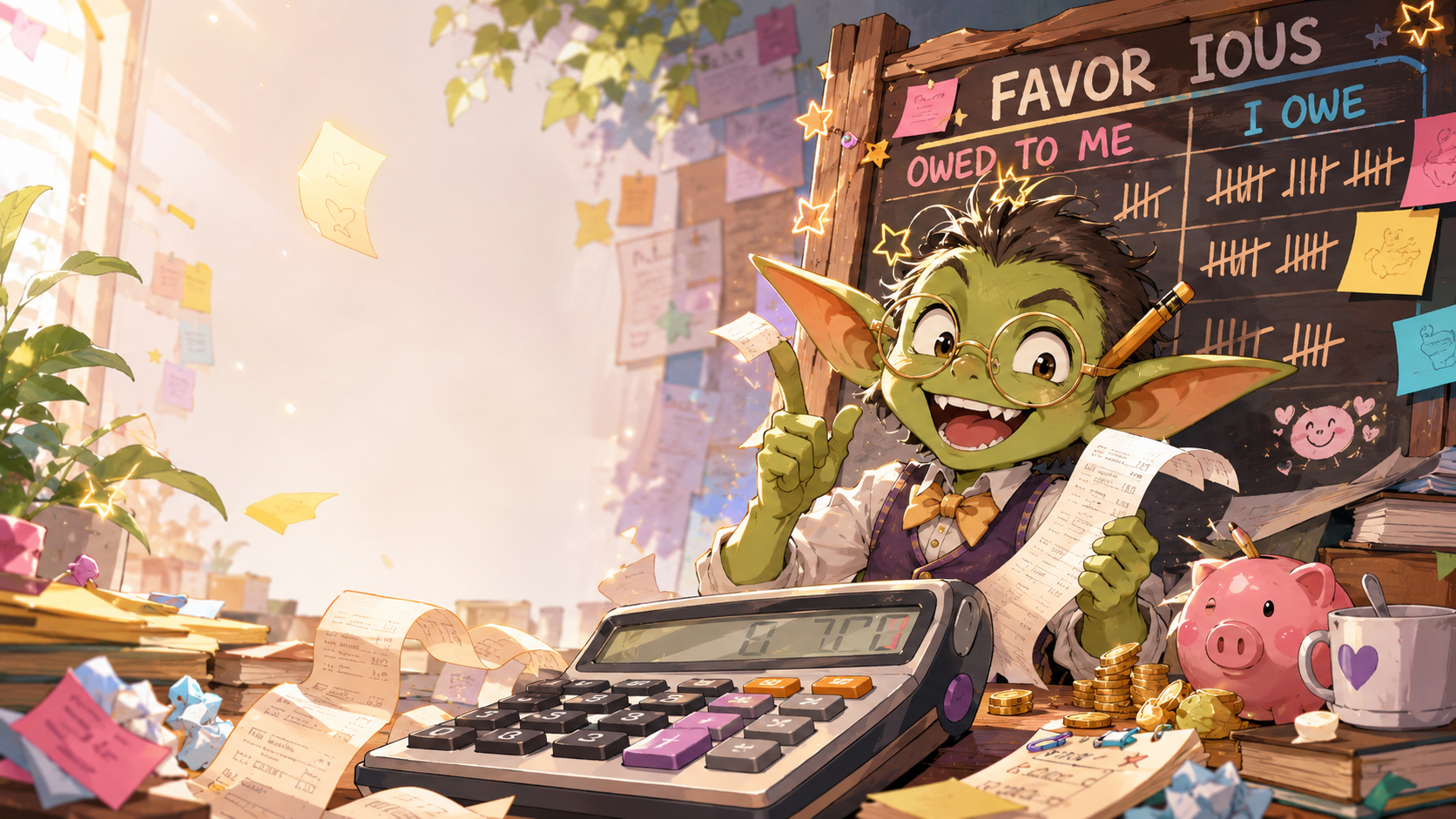
The difference between a favor and an obligation matters because it changes the rules. A favor should be optional, bounded, and appreciated. An obligation should be named, planned, and shared fairly. A fake obligation is just pressure in a nice sweater.
The trouble starts when people use “favor” for things that are actually responsibility, work, debt, guilt, or emotional blackmail. That is when the IOU Goblin opens a consulting firm.
The FavorDaily test
Ask three questions: Is it voluntary? Is it bounded? Is it appreciated? If the answer is no, no, and “they should just know,” you may be dealing with an obligation goblin.
Six signs a favor is becoming an obligation
One favor can build goodwill. A repeating, unclear, pressured favor can quietly become a responsibility nobody agreed to.
It repeats
Once is a favor. Every week at the same time is a schedule wearing a fake nose.
No one asks anymore
People start assuming you will do it because you did it before.
No easy no
If saying no triggers punishment, guilt, or chaos, this is no longer simple help.
The task expands
You agreed to one slide. Somehow you now own the presentation, snacks, and projector.
Credit disappears
Your help becomes invisible, but the expectation remains highly visible.
Resentment appears
Resentment is the smoke alarm for unspoken obligations.

Kindness needs a boundary system.
Favor Fairy brings goodwill. Boundary Boss makes sure goodwill does not become free labor with a smile.
Favor, obligation, or job creep?
Use this table when the social fog machine starts humming.
| Category | What It Looks Like | Best Response |
|---|---|---|
| Favor | Specific, voluntary, limited, and appreciated. | Say yes if you can. Say no if you cannot. Thank people properly. |
| Obligation | A real duty based on role, agreement, family plan, contract, or shared responsibility. | Name it clearly, schedule it, divide it fairly, and stop pretending it is casual. |
| Job creep | Work expands beyond the original ask without authority, credit, time, or compensation. | Clarify scope, priority, ownership, and whether something else must move. |
| Guilt trap | A request powered by shame, pressure, or “after all I’ve done.” | Return to the actual request and your actual capacity. |
Scripts for drawing the line
Clear, calm language keeps the line visible without starting a parade of drama.
When it repeats
“I helped last time, but I can’t be the regular person for this.”
When scope expands
“I agreed to help with the first part. I can’t take on the full project.”
When it needs a plan
“This is bigger than a favor now. We should make a schedule and divide it up.”
When guilt appears
“I understand this matters. I still can’t take it on.”
The clean way to turn a favor into a plan
Sometimes a favor becomes a real need. That is not bad. The mistake is leaving it unnamed.
- Name the recurring task.
- Identify who benefits.
- Decide who is responsible.
- Rotate the duty if more than one person can help.
- Set a time limit or review date.
- Make costs, credit, and expectations explicit.
When saying yes is still okay
Not every repeated favor is bad. If you freely choose it, have capacity, feel appreciated, and the boundaries are clear, helping regularly can be generous and meaningful. The difference is consent, clarity, and respect.
Healthy repeated help
“I can pick up the groceries every Tuesday this month, then let’s reassess.”
Unhealthy assumed help
“Since you did it once, we just put you down for every Tuesday forever.”