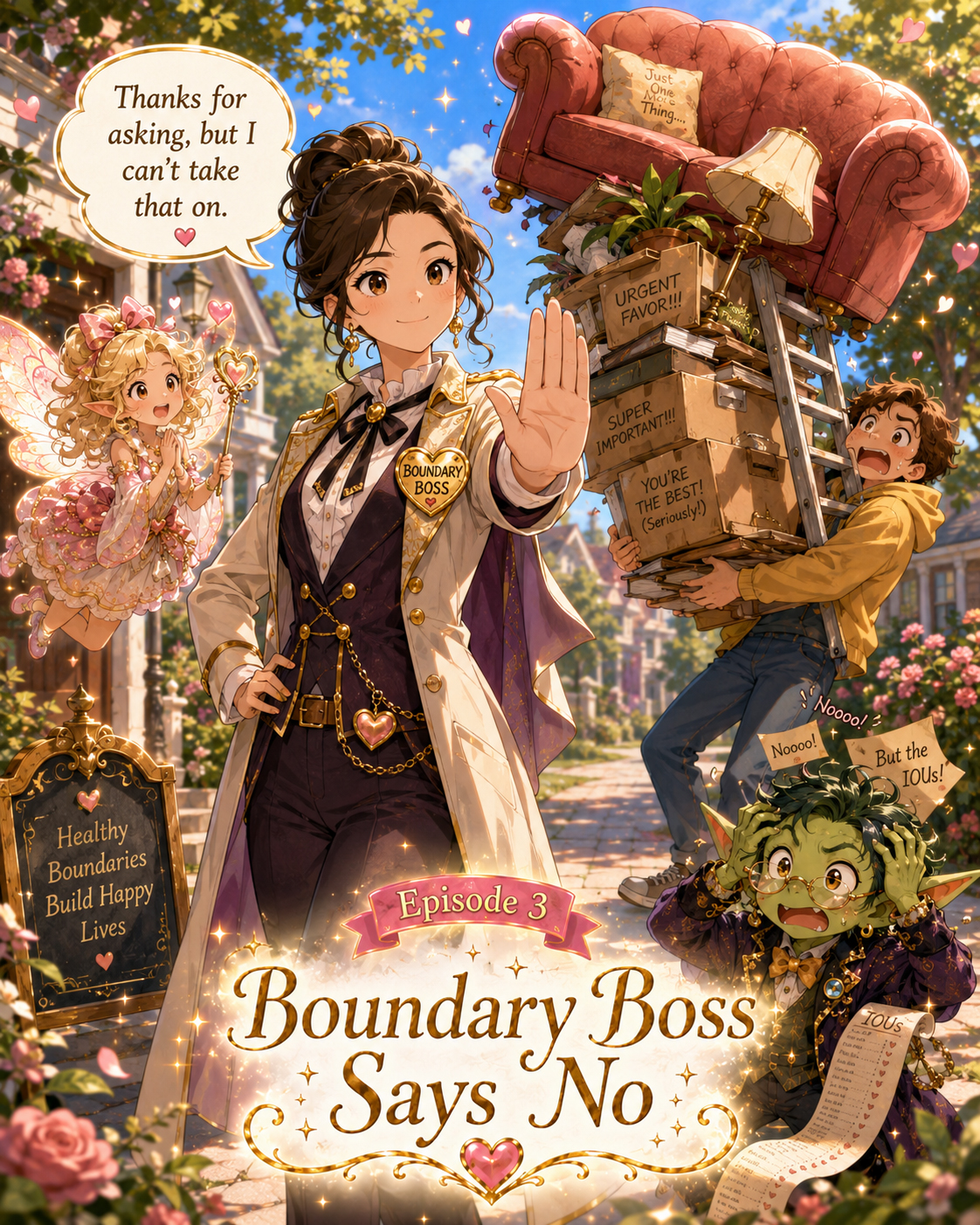
Most people struggle to say no because they want to be helpful, liked, loyal, generous, or viewed as “the person who can always fix it.” That sounds noble until your Saturday becomes a community storage unit with feelings.
The goal is not to win an argument. The goal is to give a respectful answer without over-explaining, apologizing for existing, or accidentally inviting the other person to negotiate your boundary like a used car.
The FavorDaily polite-no formula
Use this when you need to decline without drama.
The five-step kind refusal
You can be warm without being vague. You can be firm without being harsh.
Acknowledge
“Thanks for asking” or “I understand why you’re asking” lowers the temperature.
Say no clearly
Use “I can’t” or “I’m not available.” Avoid foggy maybe-language.
Keep it brief
Long explanations create debate doors. Boundary Boss keeps doors labeled.
Optional alternative
Offer a smaller help only if you truly want to and can afford it.
End kindly
Wish them well. Do not add six apologetic paragraphs and a fruit basket.
Hold the line
If they push, repeat the boundary. You are not entering overtime.
Boundary Boss is not mean.
Boundary Boss is the part of you that knows kindness needs limits or the IOU Goblin starts hiring staff.
Polite no scripts
These are short on purpose. A good refusal is not a courtroom defense.
General favor
“Thanks for thinking of me. I’m sorry, but I can’t help with that this time.”
Time conflict
“I’m not available then, but I hope it goes smoothly.”
Too much effort
“I can’t take that on right now. It’s more than I’m able to commit to.”
Repeat request
“I know I’ve helped before, but I can’t be the regular solution for this.”
What not to say
The dangerous no is the one that sounds like a maybe, a guilt apology, or a negotiation invitation.
| Don’t Say | Why It Backfires | Say Instead |
|---|---|---|
| “Maybe, let me see.” | If you already know the answer is no, this creates false hope and follow-up pressure. | “I’m sorry, I can’t this time.” |
| “I’m the worst person ever, I’m so sorry.” | Now they have to comfort you after you declined them. | “I’m sorry I can’t help, but I hope you find someone.” |
| “I would, but my entire life is on fire.” | Too much explanation invites analysis, advice, or negotiation. | “I’m not available to take that on.” |
| “Ask me again later.” | Only say this if you actually want them to ask again later. | “I won’t be able to help with this.” |
When you want to help, but not that much
Sometimes the answer is not a full no. It is a smaller yes. That can work if you are honest about the limit.
Smaller yes
“I can’t help move all day, but I can stop by from 10 to 11 and carry boxes.”
Different help
“I can’t lend the truck, but I can send you the rental place I used.”
When they push back
If someone does not accept your no, make the answer shorter, not longer. Repeating the boundary is not rude. It is clarity doing its job.
- “I understand. I still can’t help with it.”
- “I know this is frustrating. My answer is still no.”
- “I’m not available for that.”
- “I hope you find another option.”